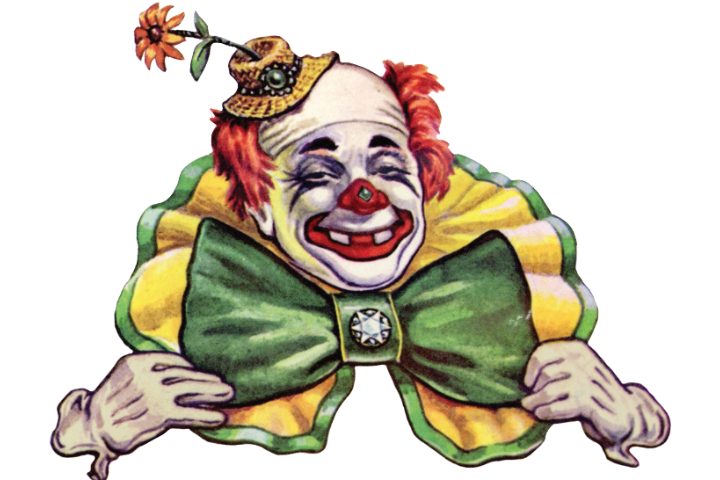
I always feel when I meet people that I am lower than all, and that they all take me for a buffoon. So I say: "Let me really play the buffoon. I am not afraid of your opinion, for you are every one of you worse than I am."
Dostoyevsky, The Brothers Karamazov, §II.2
Sexual dimorphism is at least 600 million years old. The story of male and female is so ancient that it predates the colonization of land by marine life, reaching back to that point before there was even a clear distinction between animal and plant. In fact, most of the terrestrial plants with which humanity is familiar, utilize the related strategy of heterogenesis. To imagine that we could subvert such an ancient force at the very root of genetic power and the diversity of life since the Cambrian explosion, something shared between marijuana, butterflies, and jellyfish, with merely a few years of ridiculous moral posturing and political powermongering, is so ridiculous as to be not worth mentioning. - So much for the serious consideration of transgender rhetoric.
The real causes of the transgender movement are this:
- The quest for an unassailable moral high ground.
- A protected status which gives leave to behave badly while acquiring social power.
- An identity so redundantly fortified by prestige and the histrionic display of self-realization, that it promises to banish the eternal nameless anxiety with which modernity is shot through.
The 21st century transgender movement is not about sex, and it's barely about gender. It's only about gender insofar as gender is the weakest link in the chain of identifiers conditioning the urban, sedentary, enfeebled body of the 21st century. Gender is the easiest point of provocation, the locale at which it's possible to stage a farcical revolution, in order to gain the gratifications of moral posturing: to pretend to be something one is not, and can never be, and then demand to be identified as such by all the world, is still sufficiently provocative to produce the illusion that one is fighting for something worth having - namely personal freedom. But all one is really doing, is baiting common sense with irritating nonsense, such that one can appear to have persecutors and enemies, such that the stage can be set for the drama of victimhood. Now one has a part worth acting out: a thousand times more socially rewarding and personally gratifying than the half-anonymous drudgery of being just-another-shmuck in a sea of shmucks - however brief this gratifying episode may last. I see very little discussion of the long aftermath: the many years after the medieval brutality of genital mutilation, after the initial shock and awe has worn away and one has run out of neighbors and friends to alienate and scold... Especially among those under 25 the longterm story must often be very ugly and sad. To encourage confused young people to transform their bodies into biological impossibilities ripe for the curio cabinet of vicarious exploitation, to leverage the healthy response of confusion and anxiety in youth for the production of political mascots in service of myopic and transitory social gain, strikes me as monstrously exploitative.
The brutality of transgender politics is almost equal to the cruelty of those ancient warlords who enjoyed the entertainment afforded by the castrated and disfigured. To call it "clownworld" is more true than we want to know. The origin of the "clown" is rooted deep in some of the ugliest traditions of mutilation as entertainment. "But we're not laughing." - But aren't you smirking? And don't you delight in the ironic cruelty of baiting what remains of human instinct, of watching the stupider half of humanity roil in outrage and bewilderment, as the smarter half winks to one another, knowing that when the fun is over the clowns will be shut away into the same dark corner where we keep child celebrities, botched plastic surgeries, old porn stars, and other discarded human biomass.
Is this a little dark for you? I tell you I see into the ape-heart and I know its secrets. I'm not fooled by its sanctimoniously puckered lips and feigned surprise: the wickedness and cruelty of our ancestors will find a path to daylight - not despite the moral pretenses but precisely because of them. Morality is the disguise one assumes immediately before performing something one does not otherwise have the stomach for. That's what it means to be "apesick": to be caught between one's urges to act like an ape, and one's disgust at the subterfuge required to follow that instinct. It slowly dawns on this creature what he is: the nausea of self-awareness.
Arguably one the reasons for the development of meditative discipline among hermits, is its effectiveness in dealing with the nausea of self-awareness. "How can I be defined by that, when I'm capable of witnessing it and feeling such repulsion?" And thus begins the ascetic quest to create a stable identity out of critique and contempt. Therefore allow me to abuse one of their most famous formulae, and say thou art that. What empowers the perspective I embody, is precisely the tension between critique and identification: all psychology begins and ends with self-knowledge. The ape does not want to be what he is, and in seeking the solution in disguise, posture, pathos, rhetoric, advocacy, reason, and critique, he becomes ape.
A neurosis is a containment field of personal power: a guardian spirit which once protected you against something worse than the heavy cost of neurotic behavior. Thus every neurotic entanglement is a steep contract you signed in a moment of desperation. Making shady deals with twisted spirits for the sake of protection: unfortunately that's the norm in a modern childhood, and almost no one buys their way out of that deal. What does it require? Such a spirit cannot be frightened away, wished away, nor commanded: that's precisely what qualified it as guardian. It must be appeased: there is always a sense in which even the most ridiculous neurotic distortion was, is, and will be correct. "Everything's bullshit anyway"; "no one can be trusted"; "no one really cares"; "I'll never be happy": these are all self-fulfilling prophesies, the fundamental validity of which can't exactly be disproven in even the best case. Fake it til you make it doesn't work with neurotic contracts: no matter how much evidence piles up in the opposing category, the conviction will remain. The neurotic spirit must be allowed a place at your table: it must be fed a little blood now and then, honored, named. After all, it is your first faithful friend: the depression he created was a warm blanket you shared together. You cannot ever leave him behind, else he will curse everything you do: he must be allowed to be correct, he must be allowed a little sacrifice of optimism, he must be allowed to shade your eyes from stupid wishfulness. There is a place for doom and gloom, there is a place for the worst, there is a sacred seat for violence and horror and a bitter end: that was the meaning of the ancient practice of sacrifice, a commonality in every culture of the world. Blood, sacred blood spilled right at the heart of the contract with life - the old ways said there was no greater mystery. Our private neuroses, our all-too-personal skirmishes with darkness, our needlessly ashamed thirst for the worst which inevitably finds its way to expression in every relationship, every squandered opportunity, every brutally flattened expectation which makes the general character of modernity seem so bleak and pointless: aren't we looking for a return to the sacred relation with death and loss? Isn't the "anxiety epidemic" a symptom of a body aching for the sobriety of pain? Aren't the endless consolation schemes and heavily medicated suppression apparati a stopped-up steamvalve that only builds the pressure?
I see both a growing acceptance of debilitating anxiety and a growing shame surrounding the thirst for the worst: it's no accident that the movies of the 21st century seem to become ever more adolescent, divorced from reality, and yet overstimulating and absurdly violent. Both cloyingly escapist and naïvely pessimistic: the "John Wick" series as example... The proliferation of the comic book point of view: the deferral of adulthood and its sense of responsibility for the world as we find it - and not as we wish it were. The proliferation of moral posturing and ridiculous politicizing belongs here also: all of it is merely as-if social positioning, which seeks to mine strategic advantage out of absurd fantasies no one actually believes. The great insight, which takes years to internalize, is that the ape will gladly feign stupidity as long as it's socially advantageous. No one actually believes that sexual dimorphism isn't an important genetic fact, for example: already the smarter actors are backing out of the extreme transgender rhetoric, seeking an unexhausted lode of moral authority...
There is my dark vision laid bare: can you stand it? He is my guardian spirit. He's right in this case: or at least, hearing his voice and following his logic is worthwhile, because no one else will go down that dark road with a cheerful knowing grin - but somehow he can. He looks at such things and laughs: the ape makes him laugh, despite how deeply he feels wounded by its wretchedness and how much he longs to admire it again. But not until he's been heard, in every gory detail, and every bit of mendacious cowardice before the truth of our situation is exposed, will he sit down and allow the overflowing heart of the singing poet to take over. So it is that the two sing together in my best moments, telling tales of tragedy and comedy, making all eyes weep like Odysseus in the house of Nausicäa...
Only rarely is this contemporary transgender movement concerned with anything like the mysterious power of the heyoka: that would require far too much personal excellence, solitude, spiritual cultivation, mojo, verve - in other words it could never apply to the mediocre majority of anxious modernity so desperate for a safe harbor. The aggression of a man united with the biological priority of a woman: a recipe for rare social power which requires a rare character. Unfortunately the current transgender fascination has almost nothing to do with the cultivation of outlandish character, and everything to do with an abuse of social contract for pathetic aims. The traditional allowance made for the sacred clown demanded that he orient his antics toward the communal wellbeing, that he become more responsible for everyone's sanity and health even as he threatened its norms and expectations, that he represent faithfully the thunderbeings and their power of change - but one cannot obtain this kind of power without a genuinely idiosyncratic orientation - in other words, one has to really be a strange twisted creature that's found its way toward the light and not merely a sad spectacle of imitative desperation. I fault the transgender movement not for its perversity, but its lack of glorious perversity: the trans population is ever more tame, invaded by dull moral actors and pedantic genderless bores the queens and queers of the 1980s would have mocked into oblivion if just for their bad taste in shoes.
装わぬ人の世を, 人の美しさを, 人の醜さを, この眼でしかと見た。
The human world without pretense, human beauty and ugliness, with this very eye I've seen it.
The Hidden Fortress
Again and again, Kurosawa asks this question: is humanity redeemable? What's the balance of beauty and ugliness? Is human nature more cruel, cowardly, and greedy than it is noble, kind, and generous? And most of the time, he succeeds in edifying us - he shows us the worst only to contrast the best. In the hands of the artist humanity becomes an object of informed love and pity, clarified hatred and contempt - and through his eyes even that hatefulness becomes something we are willing to swallow again and again... An artist may be essentially a seducer, but to be seduced willingly and without regret is not such a bitter fate. Yet all this only proves is that Kurosawa is redeemable: the rest of humanity through the eyes of the rest of humanity is unlikely to be anything worthwhile!
When are people redeemable? When they're looking out for themselves, when they're looking for a good time, when they're tribal and channeling their intelligence through instinct: the hustler, the hottie, the moshpit bro - these types are at least drawing upon fully rational sources of behavioral calculation. In comparison, the cargo cult scientificality of self-conscious late modernity, the lisping pretense to rational motive, the pathetic disguises of a fundamentally anxious creature, is all rather laughable, no? Isn't it about time we stop taking it seriously, when an obviously desperate but socially clever wretch takes up another posture of scientific reasonableness? Shouldn't we be quicker to spot this clown? Shouldn't it strike us as a bad joke when another pointlessly educated dope wants praise for boldly assuming a riskless compromise?
I consider the clown to be one of the most difficult archetypes of humanity. Unraveling it for myself has required the assemblage of highly diverse psychological firepower - my indirect circular approach serves me best when addressing what we believe we already understand. At first glance, it seems easy enough to formulate: the exaggeration of the ridiculous for the sake of social advantage. Often the clown is simply someone for whom there is no other form of attention.
But this immediately demands a communal definition of the ridiculous, which implies that what is parodied is what the community already knows about itself. And if a society is willing to pay something in exchange, what is the service rendered?
We should ask a professional clown. Allow me to introduce the most articulate and enigmatic clown I know of: Jacques Lacan. I've previously compared him to that famous character from commedia dell'arte, that Pulcinella: the wily amoral protagonist, somewhat like Coyote trickster, or 孫悟空, the Monkey King from 西遊記, Journey to the West, or any of the dangerous old shamans of our collective past, who fooled us, inspired us, led us astray, and probably helped stitch together a feeble sanity to get us over the next icebridge, past another winter, into another generation.
It's probably much too complementary to say that Lacan is "the psychologist of subjectivity". Where does he really shine? Where is he not merely promoting his primped Hegelian foppery, but speaking from experience? When he speaks of seduction. Lacan, the psychologist of seduction. A theory of perversion, a theory of sexy annihilation, a theory of dominance, of endless titillation - that's what he always meant and what was understood by désir. Psychoanalytic metaphysics through the eyes of a sexual predator: fascinating, but not liberating.
Why Lacan? Because his incessant talk of "the Other" clandestinely satisfies our engorged conscience and its consequences:
- By hardly speaking of anything but "Other", we seem therefore to be satisfying the demands of altruism.
- By constantly discovering how gravitationally repulsive true alterity is, we are excused from our failure to practice what we preach.
- By constantly discovering how annihilated and "subjected" subjectivity is, we feel understood and becalmed by a paternalistic master who makes of our embarrassing personal failures a tale of impossible universal woe.
- By narrowing psychology exclusively to the scope of "self and other", "imaginary and symbolic", Lacanian thinking arms and outfits the raging yet idle narcissism of the average over-and-under-educated urban pedestrian.
With Lacan we get back the right to Spinozan systematization-procrastination and the seemingly rigorous yet largely fantastic Hegelian habit of binary thinking: in other words, philosophy as irrelevant indoor unviable system-building and vacuous talk, just like we always wanted it to be.
The real admirable skill of philosophers as I find them, is to have created intellectually stimulating puzzles and ontological forms of rebellion, without ever disturbing a single brick of the edifice of our morality and means of life: to make philosophy into nothing more than well-mannered procrastination.
There is no healing power in Lacan. Lacanian teaching seems to make a mild neurotic into a much sicker but much more fascinating creature: self-interest is confused for self-respect. But maybe we prefer a "venomous flower" to a just another grimacing would-be butler? I've known such cases of Lacanian conversion, all too personally: what seems to liberate them partially, is the backdoor out of moral paralysis. Lacanian thinking does not confront but circumvents questions of how to live, even unconsciously undermines their relevance: everything becomes a question of seduction, of repulsion and attraction, of revelation and subterfuge, of information and disinformation, of beginning over again from an imaginary beginning, and thus never beginning at all. To impart a sense of a fresh start, of a beautiful ignorance, of an exciting new cloud of unknowing: perhaps that's more healing than we realize? I fault it for its lack of honest confrontation and eternal procrastination - but perhaps for a time, a youthful season, this kind of autumn of fugitive love is exactly what's needed?
Lacanian thinking is largely Hegelian idealism under new guises: a grandiose dialectic of self and other, the subject as constituted by a mysterious interiorization, an eternally unfolding logic at the very heart of consciousness... Largely fantastic and unreal - but mesmerizing. Most students simply cannot tell that very little of it is applicable to reality: it has the charm of an articulate calculus of psychoanalysis, or the innards of that ultimate anti-metaphysics.
Even if Lacan were right about everything he says about subjectivity, it might still be irrelevant. Is this advanced study suitable to spiritual masters who have conquered everything but the essential fabrications of subjectivity itself? Or is it the pseudologia fantastica of a supreme showman and artist of illusion, giving us what we want? A carnival ride of the soul? Would thoroughly understanding Lacan actually lead to greater freedom and self-mastery? Or would we only continue to stand in awe of his magic? Does he seek to liberate, or intoxicate?
Lacan talks endlessly of "desire" - but what no one ever says about it, is that this desire is always only neurotic and erotic. Only a deferral, a sleight of hand, a pursuit of mirage, a mindfuck. Lacan never talks about wanting and doing in the real world because he seems not to be familiar with it: perhaps he dresses himself, perhaps he nibbles a croissant, perhaps he prepares his toilette - but someone else builds his shelter, someone else cooks the food, someone else carts away his various messes. Nowhere in any of this fashionable psychology is the analysis of what it takes to do something big and real and difficult: the tension of yearning, the breakthrough of vision, summoning the courage to try, assessment of resources, preparation of material, assembling of parts, the recklessness required to begin, endurance of minor failure and oversight, repetition, the long will to see it through, the patience for the drawn out end, the polishing stage, inevitable disappointment, learning to move on and begin again.
How telling must it be, that Lacan did not seem to have the endurance to write books, but preferred to merely talk endlessly?
Lacan seems not to be able to analyze even his own realized ambition as preeminent psychoanalyst of Paris: what did it really take to get there? Was it all along a seductive game of neurotic deferral? Or did it take some cojones and more than a little reckless scorn? Where is the analysis of healthy youthful scorn? At least half of what is really accomplished in this world is powered as much by contempt as "desire".
Ιl y a pourtant une autre formule, qui, si elle ne démontre pas mieux son efficace, ce n’est peut-être que pour n’être pas articulable, mais ça ne veut pas dire qu’elle ne soit pas articulée, c’est « Je te désire, même si je ne le sais pas ». Partout où elle réussit, toute inarticulable qu’elle soit, à se faire entendre, celle-là, je vous l’assure, est irrésistible. Et pourquoi? Je ne vous laisserai pas ceci à l’état de devinette. Si ceci était dicible, qu’est-ce que je dirais par là? Je dis à l’autre que, le désirant sans le savoir sans doute, toujours sans le savoir, je le prends pour l’objet à moi-même inconnu de mon désir, c’est-à-dire, dans notre conception à nous du désir, que je l’identifie, que je t’identifie, toi à qui je parle, toi-même, à l’objet qui te manque à toi-même. C’est-à-dire que par ce circuit, où je suis obligé pour atteindre l’objet de mon désir, j’accomplis justement pour lui ce qu’il cherche.
There is another formula, which if it does not demonstrate any better its effectiveness, it is perhaps only because it is not articulatable, but that does not mean that it is not articulated. It is, "I desire you, even if I do not know it". Wherever it succeeds, however inarticulatable it may be in making itself heard, this one, I assure you, is irresistible. And why? I will not leave this as a riddle for you. If this were sayable, what would I be saying by it? I would be saying to the other that by desiring him without knowing it, still without knowing it, I take him as the object of my desire unknown to myself, namely in our conception of desire that I identify him, that I identify you, you to whom I am speaking, you yourself, as the object which is lacking to yourself. Namely that by this circuit that I have to take to reach the object of my desire, I accomplish precisely for him what he is looking for.
Séminaire X: L’Angoisse, §II
I've figured it out: Lacan modeled his teaching based on what he learned as an analyst: you only need to appear enigmatic, aloof, and not one but ten steps ahead at all costs - and the patient will do all the real work. Do not encourage clarity: employ the power of misunderstanding, of sudden reversals and revelations, of the unexpected. Lacan understood the power of perversity to inspire a sense of freedom and the illusion of exponential personal growth. He understood the power of seeming to be what the other wants. Cogency, empathy, and explanation are antithetical to fostering this illusion: the idea is to remain out of reach, yet so near. In fact sometimes so much more near than one ever expected - cheeks grazing.
Lacan did understand neurotic desire: this much must be granted. He is practically the prophet of intellectual seduction. But does any of this have any healing power? Or is it only an impressive narcotic - and a narcotic only for the hopelessly neurotic? Is its seductive power dependent on neurosis and does it therefore encourage and deepen the neurotic condition? Does Lacan secretly whisper in our ear that there is no escape from the ouroboros of eros? Is Lacanian thinking in the final analysis only another poisoncraft to be appreciated from a safe distance?
I would add that if one employed psychology only to seduce intelligent young women looking for the intersection of the intellectual and the sexual - one could find no better master. But to lure earnest young men into this labyrinth, to encourage this eternal swirl of the elusive, this indulgent dance of veils that does not yield to suppertime, this heady perfumery of the intellect - I cannot but find this deeply irresponsible.
I don't think Lacan at first, or ever, knew how or why his teachings were so compelling. To have known it would have broken the spell. I think he stumbled or intuited his way toward his seduction technique: I think he knew how to read an audience.
It's not Lacan himself I find objectionable. In fact there is a certain amoral atmosphere about him I appreciate. He mocks perhaps more than he teaches. I can sympathize with the delicate exigencies and risks of embitterment the stage performer must navigate: flirtation with hatred of the audience is not merely a degeneracy among rock stars but a necessity for all profound actors. Marlon Brando once said that acting was an occupation unfit for a real man. One is faced with either despising oneself for the falsification, or despising them for believing it, or finding a precarious beyond in the role of the mocking fool.
One can see that Lacan's charm has at times worked on me, also: as a "metrosexual" I was in the past more at risk of infatuation. But I've become much more wary: it's the way the icon of Lacan is used, that nauseates. Lacan the dildo...
L’animal - vous dis-je - efface ses traces et fait de fausses traces. Fait-il pour autant, des signifiants? Il y a une chose que l’animal ne fait pas: il ne fait pas de traces fausses pour nous faire croire qu’elles sont fausses. Il ne nous fait pas de traces faussement fausses, si je puis dire, ce qui est un comportement, je ne dirai pas essentiellement humain, mais justement essentiellement signifiant. C’est là qu’est la limite. Vous m’entendez bien : des traces faites pour qu’on les croie fausses et qui sont néanmoins les traces de mon vrai passage, et c’est ce que je veux dire en disant que là se présentifie un sujet, quand une trace a été faite pour qu’on la prenne pour une fausse trace, là nous savons qu’il y a, comme tel, un sujet parlant, et là nous savons qu’il y a un sujet comme cause et la notion même de la cause n’a aucun autre support que celui-là.
The animal effaces his traces and makes false traces. Does he for all that make signifiers? There is one thing that the animal does not do: he does not make false traces in order to make us believe that they are false. He does not make falsely false traces, which is a behaviour, that I would not say is essentially human, but essentially signifying. That's where the limit is. Understand me: traces made so that one believes them to be false and which are nevertheless the traces of my true passing - and this is what I mean by saying that here a subject is presentified. When a trace has been made in order that one should take it to be a false trace, then we know that there is a speaking subject as such, and we know then that there is a subject as cause and the very notion of cause has no other support than this.
Séminaire X: L’Angoisse, §V
Because I live in the high desert of North America, in the warm months I must be vigilant when walking through the brush: rattlesnakes are always in the back of my mind. There are periods when I encounter one daily. In the meantime I've learned something important about camouflage. Camouflaged shape and color can be more of a signal than is realized: it is sometimes the unsign, the false deadend, the preparatory inducement to false negative.
Would it be so difficult for a rattlesnake to produce a more subtle and less diagrammatic coloration? Moths and grasshoppers achieve this - as does the praying mantis, to pick a predator. Or is the crisp geometry of their patterns designed not to hide precisely, but to induce excess hallucination in the search function? Think about the jagged black diamonds on a pale background: doesn't this look suspiciously like the errors and artifacts of the visual cortex? What I have found through the last few years of anxious experimentation, is that trying to find a rattlesnake slowly makes you worse at recognizing it, because you have been infected by a hallucinatory gestalt. I have at times looked directly at one without seeing it, before it suddenly decided to reveal itself. Rattlesnakes hide between layers of neuronal signal processing, disguised as errata.
Why tiger stripes? Partly to break form and blend with leafy shadows, but also because they mesmerize, because they induce mild trance in the midst of a terror ripe for trance. Therefore much predatory camouflage does not merely conceal, but inspires preliminary hallucination in the search for it - and thus sufficient false positives to induce doubt: when the moment finally arrives, you hesitate.
But it was Lacan who gave me the additional clue, despite his ignorance of ethology. In spotting a hypnoid camouflage you have spotted a falsely false trace.
La trace faussement fausse: this is also the mask of irony. The primary means of confession in modernity is to reveal oneself through mockery of what one is, seeking to erase its traces even while exploiting its position. The clown says: "Because I wear the clownface, I am less clown than you." Consider the arrogance of those comedians whose career hinges on emphasizing their own neurosis: Louis C.K., for example.
This is the typical strategy of the openly neurotic and half-therapized: to achieve an unassailable position as simultaneously compassionate enough to see dysfunction in everyone, yet reserve the right to bad behavior as long as it can be diagnosed. Yet another reason why the proliferation of psychotherapy tends to only deepen neurotic investment...
The real purpose of intellectual sophistication in the modern subject is smoke and mirrors. To set up so many false positives along the way, so many parodies of neurosis, that the real neurosis remains hidden among the arsenal and one begins to believe that all traces are false: that there is no human nature. That we are thus "free": this is the meaning of French poststructuralism and postmodernity generally - hence the conspicuous usage of "post-". The final triumph is to hide the shameful secret in plain sight: to seem to be proud of one's weakness, to even convince two thirds of oneself that one is proud of it, to build a personality around this pretense! That is the urban intellectual manchild perfected.
To make compulsive insincerity a strategic advantage. To feign irony so frequently that sincerity merely seems like bad taste or poor acting. To disguise profound serious nihilism with a shallow cosmopolitan nihilism: imitative cynicism as a social maneuver. To induce misrecognition via a saturation of the signal of falseness: thus to hide in plain sight. To exhaust the native sense for bullshit by total collusion and barraging of the communicative channel, so that one may sneak right in the front door. A premature and purely mimicked irony concerning oneself which induces the nausea of a world of as-if, whose function is to blunt the power of recognition by preceding it with falsely false names.
The normative state with us is to be a liar thoroughly in form and essence, yet so well conformed to the time and place, that one is mistaken for "more genuine than genuine". One could just as easily analyze Jerry Seinfeld this way, as Socrates: modernity is not "new", and the pretense to novelty is only a symptom of degeneracy.
Das »Geträumte« des Traumes soll wiederum entwertet, seiner Realität beraubt werden; was nach dem Erwachen aus dem »Traum im Traume« weiter geträumt wird, das will der Traumwunsch an die Stelle der ausgelöschten Realität setzen.
What is "dreamt" in the dream is devalued and robbed of its reality. What is dreamt in a dream after waking from the "dream within a dream" is what the dream-wish seeks to put in the place of an obliterated reality.
Freud, Die Traumdeutung, §VI.C
I'm beginning to understand that the dream and mechanisms of the dream, can and should be employed to understand social behavior: all purely social behavior is as if. This is not necessarily to disparage sociality, only to point out why it is so susceptible to economies of deception: to see it any other way, is to risk disparaging everything about the human creature which is irresistibly genuine.
Therefore what happens when an essentially fictional behavioral set contains an avowed element of fiction? Truth appears. This is the meaning of "in vino veritas", the "play within a play", and why I consider television and the circus to be such valuable sociological sources: under the aegis of fiction and the protection of apparent negation, we begin to tell the truth.
So how do I watch for rattlesnakes? By practicing alertness without consciousness. The solution is to attenuate apperception at the center and rely on peripheral resolution, at all costs avoiding preemptive visualization. Don't think about it, don't prepare, only keep the perceptual surface clean of debris: I usually react to a snake before I have become conscious of it. The lesson for us is this: the falsely false trace relies on an excess of consciousness to succeed. The ironic clown requires an audience which wants to believe it already knows: there is a profound and disturbing connection between the scientific revolution and the proliferation of ironic actors, as the Greek renaissance demonstrated so well - Socrates was only another hipster-sophist pretending not to know...
What does Lacan represent? The freedom of the mask. The freedom of someone who has discovered he is too clever to be caught, that his gift of unflappable gab can get him out of any jam, and that by acting masterly he becomes master. It's extremely telling that Noam Chomsky called him a "conscious charlatan": does anyone else sense envy in that phrase? Is he telling us it's against the rules to be conscious about one's farce? That is indeed the sense Lacan gives us: his game is so obvious, so upfront that we convince ourselves it can't possibly be the truth: Lacan hides in plain sight. The purloined letter in Lacanian teaching reads: it's all bullshit. But the fact that he gets away with it, that everyone loves it, that the audience applauds and sits with open mouths scribbling his every word - that's the real lesson in studying Lacan: all the world's a stage.
He's thrilled to be fooling us all on multiple levels: too many levels to have been conscious of. Chomsky was wrong again, as always: Lacan was the ultimate unconscious charlatan. To the degree that he was conscious of it, was only mask, mockery, deflection - which is why someone like Chomsky feels so insulted.
It's unfortunate that Lacan was so irresponsible with his insights. For example, he was right to point us psychologists toward projective geometry: it's one of the crucial aspects of the method of the masters to understand that in the morphology of psychic phenomena, some relationships are invariant, others are not. Nietzschean thinking often revolves around this insight, and takes delight in shifting perspectives in order to watch the play of variance - in order to eventually hint at what does not change.
Entwining pure math with psychoanalysis is just too tantalizing. But Lacan lacked not only the intellectual conscience, but the assiduousness to see it through. And this is not all that prevented Lacan from reaching serious depth: as is typical of the latin lover, his levity extends only so far as his vanity permits. He cannot afford to ever admit to being a goof. The result is a nonchalance which is a mask for how terribly seriously he takes himself.
I believe that with "la faussement fausse trace" I've drawn out the best and worst of Lacan in a single stroke. I also feel I've fulfilled my obligation to him by demonstrating both his genius and his deviousness. Lacan himself is the purloined letter of postmodern philosophy: he is exactly what you hope he isn't. And in the tension between your better judgment and your desire, he reveals your weakness. That you feel exposed and in risk of coming up short, is only the same tired gag of every fashionmonger and friseur. "You're nobody without these trinkets": nearly every success in postmodern philosophy has been predicated on conspicuous consumption. Which explains why Lacan is so popular with art students and film critics, and so unpopular with establishment psychiatry: the psychiatrists didn't want sexy bullshit they can't keep up with, they wanted a dullard's taxonomy. To bore your rivals out of the competition, to secure authority and the illusion of knowledge through impenetrable dullwittedness... To the precise degree that psychoanalysis was able to become dull, it has been absorbed by establishment psychiatry.
Lacan is the pinnacle of the French style in psychology: one must appreciate how much that style owed to the novelists and playwrights to understand the statement. His fluency in unconscious mechanics, the ease by which he deals with the uncanny, the way he is able to convincingly paint anxiety, paranoia, and seeming-to-be...
But Lacan lacks an intellectual conscience: this also cannot be denied. The most flattering way of accounting for this lack, is to say that he had to sacrifice our expectation of coherence in service of what is not necessarily very intelligible and certainly not expected. He says this more or less somewhere: "why should we expect the truth to be intelligible?"
Lacan has in the end only accelerated the decline of psychoanalysis. Like a belligerent rightwing commentator confirming the prejudices of the left, he confirms what the stodgy reluctant psychiatrist wanted to believe about the whole of the field: that it was fashionable nonsense from the beginning. Klein, Bion, Lacan, and not to even begin to mention Jung - not only failures to continue the discipline of Freudian thinking, but effective examples of why this discipline cannot succeed on any scale.
But with these failures I've come to understand something about this "soft science" which is not commonly known. Physics and mathematics are usually regarded as the finest expressions of science: but are we ready to admit that these are the fields in which the scientific attitude requires the least emotional maturity? Psychology is the toughest test of the scientific spirit: no other project of knowledge forces you to gamble your self-respect, your worldview, your loves and hates, your sanity. In no other science are you so at risk of becoming a clown.
Allow me to demonstrate again what a hostile takeover of evolutionary psychology might look like. What's the origin of this unique primate ability to laugh? Firstly, it's important to dwell on the image of monkeys in the trees, screeching and gesturing at you from above: you understand what they mean by this. Consider the squirrel who won't stop chattering at you when you come too close to its cache: what do you feel? Irritation, a little embarrassment maybe - annoyingly witnessed. Laughter is the arboreal technique for dealing with threat: to make a fuss, sound the alarm, emphasizing distance and unreachability, so that superior firepower feels diminished or at least irritated enough to leave. The important factor distinguishing it from a simple alarm call, such as prairie dogs or chickens make, is this factor of irritation through unreachability: "You can't get me, and I know you want to". In other words, because taunting deters leopards, we developed laughter. Therefore who is the clown and why is he universally granted a place of ambivalent honor? Is he the first one to laugh, or is he the one who causes us to laugh, making us feel safe again? Is he the parody of a threat - the threat of self-awareness, the threat of the mirror? By containing, exaggerating, and mocking our potential for self-consciousness, the community feels relieved: the leopard of exposed apenature has retreated again... Which would mean that the real function of comedy is to suppress self-recognition. An abject fool even the lowest slob can feel superior to: one could learn something by measuring the average social distance any audience wants between itself and its clowns - close enough to know people like that, but far enough that the thought, "he's better than me" never occurs. Does the successful sitcom need to toy with identification of the average loser just long enough to discharge self-recognition? Or is merely shining the spotlight on the mediocre enough to pique vanity, and thus forestall any awakening? This gets filed under everything I wish sociology actually was.
The clown's relationship to ritual exclusion: instigator, lure, or scapegoat? Perhaps all of them at once. But it's certain that the clown satisfies the need to find someone within the group to exclude: the clown is almost a parody of ritual exclusion, as though for the edification and sanity of the community. Look carefully at Emmett Kelly: the hobo, the sad loner, the ne'er-do-well. He not only knew what a post-depression era crowd wanted to see mocked, he understood something more about the function of clowning. In his most famous bit, he would stand dejected in the center ring with a broom, and act as though it were his job to sweep up the spotlight. The lazy loser who just wants to escape notice, pursued and plagued by attention. He tries to splatter it, scatter it, and diminish it, but it sneaks after him - which especially seemed to delight the crowd. Eventually he sweeps it under the rug: identification and exclusion has been deferred... We can't doubt that in the most direct and universally appealing forms of comedy, the indelible logic of apenature appears: a shadowplay like this is much more ingenious than it may seem.
It's certain that the clownface was originally designed to make facial expressions more visible at a distance, just as most early forms of makeup in showbusiness. But immediately something else is invoked: the face of the ape ancestor, with his big expressive lips, his ringed eyes, his upturned nose. The clown is what Homo sapiens knows it is and needs to pretend it is not. This was clearly also involved in blackface: the "minstrel show" as one of the uglier examples of ritual exclusion - or its parodic discharge.
Why is the mime universally hated by good taste? Because it's an abuse of the clown-contract: the mime proceeds in the direction of the clown, and at the last moment wants to be taken seriously. He wants the recompense of a comedian, but rather than laugh at his parody he asks us to invest all the more: he only thrives where a sufficient baseline irony already exists, where good comedy is impossible anyway - in other words, among the insufferable.
Why is the clown so often ugly? Because he seeks a position lower than the average. Because when creating something everyone can laugh at, free of envy, ugliness helps.
Why is the clown frightening? In the "whiteface" type especially, there are echoes of the social predator. Whenever a stunted, twisted reject chooses to occupy himself with children, the community should beware. Whenever undeveloped adults attempt to relate to kids, the result is always the same: they parody stupidity and limitation, rather than drawing on innocence and potential - Mr. Rogers and "Barney" versus Sesame Street and Jim Henson generally. But the clown proper has nothing to do with children: it's about the failures of adult life, the sad absurdities they are subject to, and their need to feel at least better than the worst. That children are afraid of clowns is to be expected: subjecting them to it is only a cruel whim, an insult to childhood as some kind of preemptive failure. The clown as failed child: now we've tunneled back into the heart of ape cruelty, and discovered what it finds entertaining.
Here I turn again to anthropological testimony. I would like to recommend Colin Turnbull's classic, The Mountain People: as emotionally difficult a piece of anthropology as they come. Whereas he was blamed for idealizing the Pygmies in his previous work, here he's been accused of demonizing: the Ik people he did not love - in fact they taught him to unlearn love. If the Pygmies showed him innocent goodness, the Ik showed him innocent malice. He confronted the reality of a dying tribe, as many anthropologists have: but what was perhaps unique was the recency and suddenness of the transition from nomadic hunters to sedentary villagers. The result was a disruption and displacement of morality which is rarely so visible.
So we gave her more food and made her eat and drink all we could, put her stick in her hand and pointed her the way she wanted to be pointed, and she suddenly cried. Thinking she was afraid or wanted us to go with her, I asked, and she said no; she was crying, she said, because all of a sudden we had reminded her that there had been a time when people had helped each other, when people had been kind and good. Still crying, she set off.
The Ik up to this point had been tolerant of my activities, but all this was too much, combined with the fact that my colleague established a dispensary where he treated old people as well as young, but gave food only to the old. Openly critical of this waste of effort and food and medicine, the Ik said that what we were doing was wrong. Food and medicine were for the living, not the dead. But the old continued to come, the few who were left, not in the hopes of being kept alive, but so that they could go off quietly and die a little more comfortably. Then I thought of Lo'ono - that incredibly wrinkled old face, the sightless eyes peering as though they could still, with a struggle, see, and then those sudden, frightening tears of anguish at a memory that had been better forgotten. And I thought of other old people who had joined in the merriment when they had been teased, knocked over or had a precious morsel of food taken from their mouths. They knew that it was silly of them to expect to go on living, and, having watched others, they knew that the spectacle really was quite funny. So they joined in the laughter. Perhaps if we had left Lo'ono, she would have died laughing, happy that she was at least providing her children with amusement. But what did we do? We prolonged her misery for no more than a few brief days, for although Longoli did let her into his compound, he took her food and gave her neither food nor water. Even worse, we reminded her of when things had been different, of days when children had cared for parents and parents for children. She was already dead, and we made her unhappy as well. At the time I was sure we were right, doing the only "human" thing. In a way we were - we were making life more comfortable for ourselves, confirming our own sense of superiority. But now I wonder. In the end I had a greater respect for the Ik, and I wonder if their way was not right, if I too should not have stood with the little crowd at the top of the oror and laughed as Lo'ono flapped about like a withered old tortoise on its back, then left her to die, perhaps laughing at herself, instead of crying.
The Mountain People, p.228
One must have courage to read The Mountain People with an open mind, and even more so an open heart. It's quite palpable and even familiar, what Turnbull felt in those years: it's the disappointment and bitterness of our worst moments, when life seems like a cruel joke played out for no one - when we suspect that we have been the chump all along, and that nothing was ever going to turn out differently than this final indifferent contempt. For most of us, only a scathing lifelong affliction of neurosis will ever teach us to feel this way: that no one cares, that even you cannot afford to care, that not only are you alone because no one else will be with you, but because you have abandoned yourself also...
[...] the quest for morality seemed increasingly pointless. It was yet another luxury that we find convenient and agreeable and that has become conventional when we can afford it, but which, in times of stress, can and should be shucked off, like religion and belief and law and family and all sorts of other appendages that become hindrances at such times.
p.230
Turnbull found out how shallow human virtue is, that familial bond and loyalty are luxuries, that the human creature makes accurate calculations of personal advantage at every turn, and will exploit every opportunity to seek the slightest gain. He found out that morality is a shadow puppetry, because the human being can live without it, because when it is no longer advantageous, it is shed entirely rather than adroitly shifted in a politically safer direction. His book is a chronicle of a forcible disillusionment with the human character: it would never have happened to a such a nice and well-meaning man without such extreme and prolonged exposure to a tribe at the edge of annihilation.
But we are mistaken to say: "Here is human nature revealed", as though an emergency protocol sufficiently expressed the entirety. The human nature we're looking for is not a core essence of selfishness which resists some other virtuous force called altruism - there is no tidy binary relation between "altruism and selfishness" as has been propagated by sneaky priests hoping to inspire malleable stupidity in the wake of that teaching. Rather what we're looking at is a layered series of functional modes, each with their adaptive value: a chain of metastabilities along several dimensions stretching from stress to ease and back again. Cruelty to kindness, violence to peace, loyalty to treachery, lies to truth: each have their place, their function, their time, their reason for being. And each will negotiate with the other to achieve expression in any moment: every gesture, every word, every emotion is a compromise with everything the human creature has evolved to be ready for. What the Ik were forced to become, is what humanity has been forced to become many times before: to capitalize on the worst of apenature in order to ensure another day and another chance. If they are devious, cold, and vicious it is because these are virtues in the canon of ape behavior: it's their genuine innocent happiness in the midst of cruelty that seemed to disturb Turnbull the most - that laughter could be so sweet when inspired by pain and death. But mocking laughter is almost a "metavirtue" accompanying all others: it's a sign that the ape believes in itself and its future. There is no essential bond between innocent laughter and moral innocence: that's a vertiginous lesson cutting right into the heart of apenature.
Therefore what's most instructive about this book to me, is not so much the Ik themselves but to watch Turnbull spiral and divest himself of his illusions. Piece by piece, he learns to find the part of himself reflected in the cruelty and indifference of the Ik. The ledgerbook of his soul shrinks by the day, as he concedes more and more territory to an exposed moral posturing and finds himself more honest but seemingly less substantial than before: moral outrage is a swelling, a bluff which conceals lack of resolve. So much of what people fear in a supramoral perspective is that nothing will remain: but this is only the fear of a balloon-spirit, a gasbag, and the reality is that so much more subtlety and sweet emotional valence lies waiting in the aftermath of the grotesque posturing of moral defenses. There's also no essential enmity between cold calculation and gentle affection: a successful hardass can afford such delicacies.
The beautiful human, like the beautiful body, seems to be a myth perpetuated by the game of self-deceit, at which humans are so singularly adept. In fact, after even a few months with the Ik one is tempted to think that if there is such a thing as a basic human quality, self-deception it is.
p.33
It is ugly because one expected to find something else. One expected to find a pantomime of the social virtues: a good people will respect your fears, your fragile ego, your sense of fairness, your sentiments and consolations. A bad people will reveal the shallow and transitory nature of your own virtues, and laugh at you for them.
Even reciprocal altruism, that overfed brat of anthropology, doesn't survive the experience:
These are not expressions of the foolish belief that altruism is both possible and desirable; they are weapons, sharp and aggressive, which can be put to divers uses. [...] The object, of course, is to build up a whole series of obligations so that in times of crisis you have a number of debts you can recall, and with luck one of them may be repaid.
p.146
But this is merely the unconscious social calculations which the human creature performs at all times, in all circumstances: here it's merely naked. The Ik are merely more naked than humanity usually is: their greed, their pettiness, their vicious delights, their incessant scheming, their shallow emotion, their transitory alliances - these are usually the "foibles" our storytellers and psychologists go to great pains to reveal in the everyman, peeling back the many layers of flattering clothes. These vices are usually the crux of a gaudy morality play, or the butt of a racist joke, or just the more obvious sins of a wretched gossiping old woman, or a greedy old fart, or a spoilt child: but to find it at the heart of everything a society is, to suspect as Turnbull seems to, that these calculations are in fact the definition of sociality itself - that is a brave first step, and yet also still too naïve. Cynicism is the naïveté of the disappointed. It's the interplay between flattering costume and ugly motive that defines human sociality still more: without the polite lies and deferential mutual deception, it would not be human society. And who's to say that our beautiful illusions don't have just as much validity? When we dance in concert and mime the rituals of a virtue we don't possess, don't we come almost as close to the possession of those virtues as to the dispossession of them?
Therefore it's not so much "altruism" which the Ik have been forced to abandon under stress, but vanity. The most adept social maneuverers are always on the lookout for those two most reliable handles of primate psychology: greed and vanity. If it were only greed at play, there would be no recourse in negotiation and the stalemate would result too often: the salesman must have something else to appeal to. The ape also needs social greed alongside his impeccable material greed to function as a group: in other words, it's the foible of vanity that makes us good neighbors.
Turnbull summarizes the Ik childhood:
[...] that is the rite de passage, the destruction of that fragile bond called friendship. When this has happened to you three or four times you are ready for the world, knowing friendship for the joke it is.
p.137
But this is just ghetto logic - this short ride "from the bullied and beaten to the bully and beater". It seems clear to me that he could have done the same study in the worst neighborhood of 1980s Detroit, or 1930s Shanghai, or Soviet Moscow, or a supermax prison in Alabama. Turnbull's book is after all only the record of a remarkably brave but still very naïve clean boy coming to grips with some hard truths, in his own scholarly, heavily moralized way - something Bartholomy would know about. He makes a few feeble attempts at academic detachment, but has too much honesty in concert with so much violent exposure to sustain it: he admits the defeat of his conscience, his worldview, his prejudices. It is the process of this defeat which is interesting and instructive.
It's clear that in a more embedded historical context Turnbull's study would not have cornered his moralizing naïveté so effectively: it's always possible to blame "society", or the institution, or economics, or whatever other name one finds convenient. And in the case of the Ik we blame politics and hunger: but there was something about their situation perched on their mountain, largely autonomous, almost enjoying their own slow demise, refusing to learn another solution that cut into Turnbull's tender heart and showed him "all the bestiality I ever want to see".
It's important to remember that Turnbull was an Oxford-educated British boy: suddenly all the shock-and-awe and the drawn out self-absorbed moralizing makes more sense. If he had been an American of the mid 20th century, perhaps Brooklyn-born, he might have attempted instead to jive with the Ik - to already be that cool, unconcerned, a true realist. And we would have lost this useful confrontation between Western cultivated naïveté and instinctual necessity.
While they still retain the quaint old-fashioned notion that man should share with his fellows, they place the individual good above all else and almost demand that each get away with as much as he can without his fellows knowing.
p.101
Its likely that even at the height of their functional nomadic days, Turnbull would have found the morality of the Ik difficult to accept: they clearly possessed the harsh pride of the hunter and the political cunning of the nomad. It seems that by being thrust directly into sedentary life, this naked pride of the hunter found itself most compatible with the shameless exploitation of the village lout: and thus the Ik began hunting each other. The cold heart toward the young and old that once kept their lineages strong enough to handle the herds of the African steppe, now seemed merely cruel and thoughtless.
And as is clear from the preface composed in the aftermath, he found a way to escape his own insight - scathed, wiser, but again foolishly wishful where his wisdom could not grow:
In spite of it all, and contrary to the first tidal wave of disillusionment, it has added to my respect for humanity and my hope that we who have been civilized into such empty beliefs as the essential beauty and goodness of humanity may discover ourselves before it is too late.
All that remains to the Ik is mockery, derision, the misfortune of others. The finest and most unique weapon of apenature remains to the end: without laughter, the human race could not have convinced itself to press through the unimaginable bottlenecks of the last 2 million years. What I'm terming "clownworld" is therefore only a resurgence of this core adaptive strategy in the midst of cultural decay: to find someone more ridiculous than oneself, to manufacture someone - an angry dwarf, a mutilated child, a sanctimonious eunuch, a half-man half-woman sacrificial object, carried aloft to the highest temple... Praise and glory are prelude to that communal sacrifice which justifies and perpetuates even the most corrupt and dissatisfied social sphere.
That the human race is a making a fool of itself is no accident and not merely a result of its social desperation. Just as I see calculated risk mitigation in gullibility and willful stupidity, so in the grotesque clownfaces of moral posturing I see a deeper unconscious stratagem. Not only to make the world uglier, and thus flatter, and thus more navigable, and not only to induce the atmosphere of farce such that the terms of social negotiation remain safely within one's powers of imitation, but also to draw out disgust and dismay from those in whom aesthetics retains the compulsion of instinct - in order to identify, isolate, and target them. The nausea induced by the moral clown is part of the targeting system of anonymous mass violence. They exaggerate precisely those traits they know you cannot stand: partly as a form of short-term revenge, but more profoundly in the hopes of eliminating all destabilizing forms of clarity and beauty. This is one of the deeper motivations for the epidemic of obesity, for aggressive cultivated ugliness, and general slovenliness in the lower classes - alongside the hyperbolic demonstrations of morality in the upper classes: they seek to know who cannot withstand ugliness. This isn't a particularly new arrangement, and I could probably have made the same observations in postrevolutionary France, as Stendhal did.
When surprised by an unexpected scrutiny, people often behave worse than usual - not merely as an expression of nerves and self-sabotage, but as a means of regaining control. When people feel judged for their wretchedness, they often seek to provoke yet more disgust in order to find a commonality at the lowest possible level. At the moment you feel infected, they say: "You are no different."
And we have to admit, there's an entanglement between our attitude of superiority and their cultivated ugliness: who's the clown? Who's confused about essential human nature? By splitting and projecting its extremes, we have made the problem seem insoluble: one side judges moral posturing for its ugliness and hypocrisy but requires its haughty mien; the other mocks the judge but would like his right to rule. And both get what they want at the cost of their better judgment: the result is the well-known arrangement wherein the unconscionable hypocrite achieves rule by deepening his cynicism into nihilism, while the conscientious objector achieves haughty critique by repressing his moral skepticism and risking hypocrisy - and around we go, blurring one into the other.
He looked me straight in the eye as he carefully said, "They are burning a man for incest." I think he was looking for some kind of reaction that he could exploit, but I merely felt a mild interest and asked if they would burn him dead.
p.262
The connection between clownworld and the Ik: they're hoping to catch you in a moment of genuine moral outrage, so that they may laugh at your naïveté, your credulity, and maybe your hypocrisy. By spending the currency of self-contradiction so blatantly, by exposing his own hypocrisy so flagrantly, the clown hopes to evoke moral outrage - to find a point of compulsion, which is a point of weakness. Anything non-negotiable is a point of weakness in social terms: morality is always laughable - this has never been far from awareness in human history, despite appearances.
It's long been my intuition that hidden in the clown is a form of wisdom which defeats all others. That the clown represents the end of wisdom, or its penultimate. There the problem of desire is supposedly overcome. Desire within the project of knowledge always threatened to reduce every discovery to wishful conclusion, vanity, premature enlightenment. By seeming to resign to foolishness, the holy fool obtains that which was not his to begin with. When I was on Mount Athos in my early twenties, I traveled with a young Russian monk who was visiting one of those saints-in-the-making, a special recluse. The resulting scene was as Dostoyevskian a moment as I've ever known. I remember how he greeted us: he stuck his bulbous nose through the fence and asked what the hell we wanted. When my earnest companion became obsequious and desirous of his wisdom, this wicked old man spoke only to his donkey, making a show of lavishing attention and affection on the perhaps equally confused creature. I've been taken in many times by pretenders to wisdom, but in this case I felt I saw through the whole farce: this old man was very skillful at pinpointing the arrogance and ridiculous attitudes of his supplicants, and I felt his mockery was justified. But I didn't feel he had much more than that, and allowing his disciples to believe there was a great wisdom hidden behind the jokes, was a form of dishonesty. Claiming not to have it, they believe you have it all the more. The ape who mocks the ape seems to transcend apenature, despite utilizing at least two key features of that nature: mockery, and the falsely false trace. The holy fool isn't genuinely holy because he's a false fool, he's a genuine scoundrel because he's doubly false. Those who seek human wisdom are fools, and those who embrace foolishness become ape-wise: I've spent too many years on the wrong side of that formula not to know better. It wasn't until I learned the same lesson with women that I got it. It didn't matter that Nietzsche told me so: I couldn't hear until it was too late.
So I've learned to doubt the knight of infinite resignation, the ironic rabbi, the stonewall psychoanalyst, the withholding guru, and any form of the ecstatic slave, the one who needs my confirmation to be complete. He feints, I do a doubletake, then because he respects me more than he lets on, he begins to believe it. The audience acts before the stage, the actors merely imitate, and there is no witness.
I searched for this witness. I played the kind of fool almost no one is willing to play: the earnest unwilling fool - the kind of young man who creates sages and teachers in the wake of his admiration. And in the long aftermath I can tell you this: an earnest thirst is worth more than all quenching answers. I have wished that I was the coolheaded clown, knowing and ironic, but my type is cursed with real foolishness: honesty, yearning, and perseverance. To be too sincere, too motivated, too serious in intent: I know the pain of the child who is already a joke because he is already too old in intent and too young in method.
This post is an except from Apesick.